Premises Licence Reviews Illegal Working

A Home Office visit can turn into a licensing crisis fast.
This guide on premises licence reviews and illegal working: what to do after a Home Office visit (UK) sets out the key steps.
Immigration Enforcement activity has risen sharply across the UK. The hospitality trade and licensed premises remain a key target for enforcement.
During 2025, Immigration Enforcement carried out 12,791 illegal working visits and made 8,971 arrests. Both were the highest annual figures in the published series. The Home Office also issued 2,438 civil penalties to employers. Those penalties were worth more than £130 million.
For a licensed business, the fine may be only part of the problem.
Illegal working can also put the premises licence at risk.
The Home Office is a responsible authority under the Licensing Act 2003. Immigration Enforcement can ask a licensing authority to review a premises licence where immigration crime or illegal working affects the prevention of crime and disorder objective.
A premises licence review can lead to new conditions, the loss of licensed activities, removal of the DPS, suspension of the licence, or revocation.
That makes the hours and days after a visit vital.
Illegal working is a licensing issue
There was once a tendency to treat right to work compliance as mainly an employment or immigration issue.
That is no longer safe for licensed operators.
The section 182 guidance makes the position clear. Crime prevention includes stopping immigration crime and illegal working at licensed premises. Licensing authorities are expected to work with Immigration Enforcement and the police on these issues.
Licence conditions can also require right to work checks and records.
Home Office guidance goes further. Immigration Enforcement can seek a review of an existing premises licence where illegal working or immigration crime raises concern. That can follow a visit, shared information, or other regulatory action.
For an operator, one enforcement issue can quickly become several.
There may be an immigration investigation.
There may be a civil penalty.
There may be employment issues.
There may also be a Licensing Act 2003 review.
Each needs proper handling.
One illegal worker does not always mean revocation
It is important not to overstate the position.
The Home Office uses a stepped approach.
If one or two illegal workers are found and it is the licence holder’s first known failure linked to the licensing objectives, Immigration Enforcement will normally issue a warning letter.
That does not mean the premises licence is safe.
The Home Office will look at the wider facts.
Previous civil penalties matter. Repeat failures matter. Wider breaches of the licensing objectives matter.
Finding three or more illegal workers is a clear factor in favour of stronger action.
A review may also be considered where there are only one or two illegal workers but serious extra concerns.
The Home Office gives examples such as locked fire exits or an illegal worker left alone to run the premises and sell alcohol. Serious safeguarding concerns, licence breaches, and other signs of poor management can also push a case toward review proceedings.
This is why the response to a visit must look at the whole licensed operation.
It is rarely enough to deal only with the employment status of one member of staff.
What should you do after a Home Office visit?
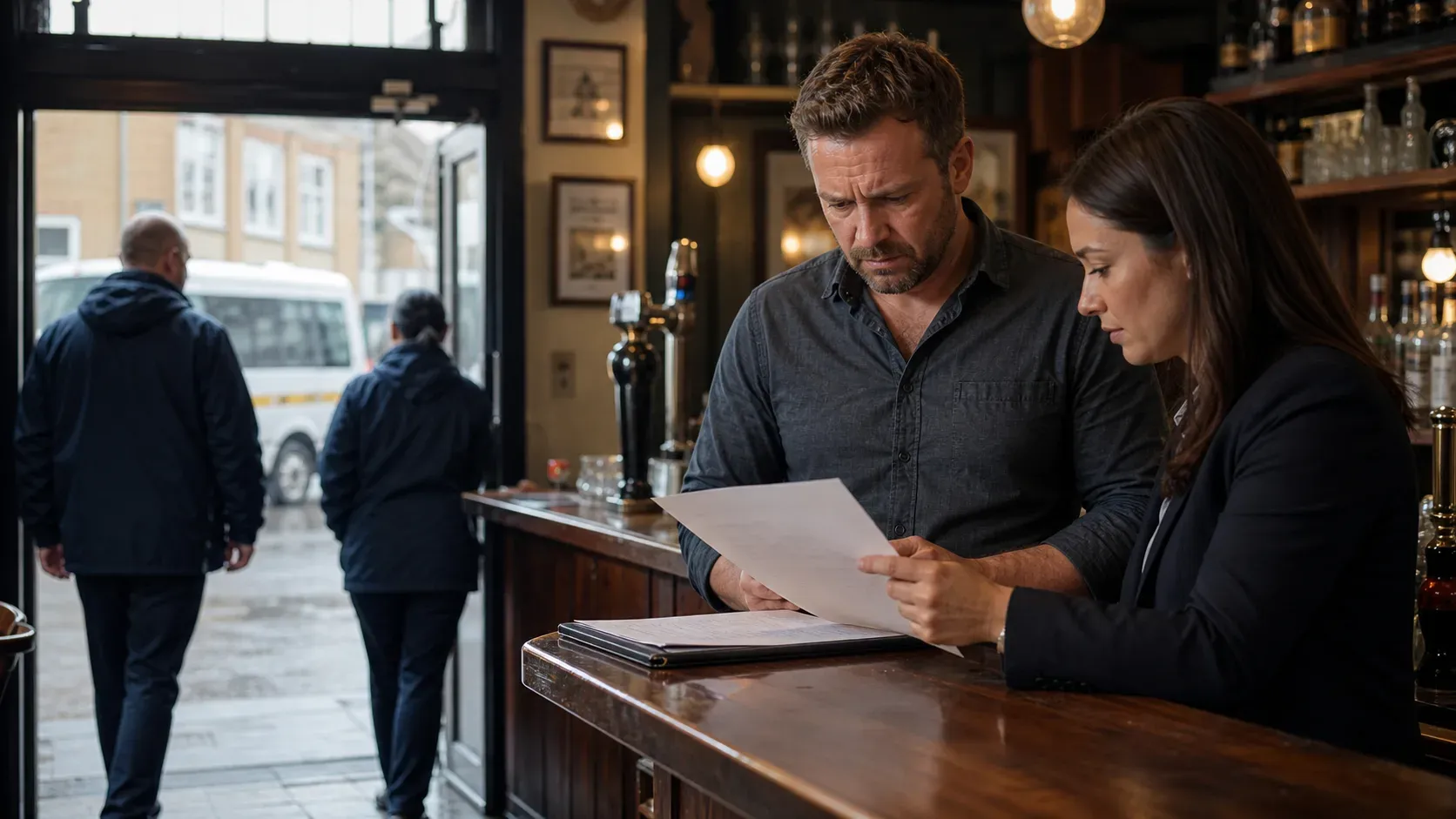
The first response should be calm, organised, and evidence-led.
The exact steps will depend on the facts. However, there are several things we would usually want a licensed operator to do straight away.
- Preserve the evidence. Secure CCTV, staff rotas, right to work records, training files, incident records, and any relevant emails. Do not let key CCTV overwrite itself. Do not rebuild missing records after the event.
- Work out exactly what happened. Record who attended, what was checked, which staff were spoken to, what documents were asked for, and what action was taken. Build a clear timeline while the facts are fresh.
- Separate the legal risks. Immigration advice should come from a properly qualified immigration adviser or solicitor. At the same time, someone needs to assess what the incident means for the premises licence.
- Review the whole premises. Do not limit the review to right to work documents. Check licence conditions, CCTV, incident records, staff training, fire safety, age checks, management arrangements, and any other area that could draw criticism.
- Fix real failures quickly. If something is wrong, put it right. New policies, training, or management controls should solve a real problem. They should not be made just to look good before a hearing.
- Keep proof of the changes. A policy alone proves very little. Keep training records, audit results, compliance reports, and proof that new steps are being followed.
- Keep checking. Remedial action should continue after the first rush. Ongoing checks can show that changes were made and kept in place.
Speed matters.
But credible action matters more.
Do not wait for the premises licence review
One of the worst moves is to wait for a formal review application before doing anything.
By then, useful evidence may already be lost.
Ask yourself: if this case went before a licensing sub-committee tomorrow, what could we show them?
Could you show who manages the premises?
Could you produce the right to work records?
Could you show that staff understand their duties?
Could you show that licence conditions are checked?
Could you show what happened during the incident?
Could you show what changed afterwards?
A hearing is not about promises.
It is about evidence.
A committee will want to know whether the problems have been fixed. Complete Licensing’s approach is based on evidence, action, and ongoing compliance.
Licensing crisis management needs more than paperwork
A serious licensing problem rarely fits neatly into one area.
An immigration enforcement visit may raise questions about management control, employment, CCTV, crime and disorder, safeguarding, training, and licence conditions.
A police incident may also raise environmental health or public safety concerns.
A review application may contain years of allegations and records.
This is why Complete Licensing uses a mixed team for licensing crisis management.
Our consultants and experts include people with senior backgrounds in policing, police licensing, and environmental health. We can also bring in other specialists when a case needs them.
This lets us look at a problem from several angles.
What would worry the police?
What would worry the licensing authority?
What would an environmental health officer notice?
What evidence is missing?
What has the operator actually changed?
Can those changes stand up to scrutiny?
That is very different from simply filling in a form.
Ongoing compliance can protect a premises licence
Good licensing compliance is not something that should start when a review notice arrives.
Complete Licensing provides ongoing compliance support designed to find problems earlier.
Checks can be planned or unannounced. They can mirror the type of visit that might be made by a licensing authority or another responsible authority.
Our work can include reviewing CCTV, ID procedures, incident management, licence conditions, staff behaviour, and other practical controls.
We can also review individual incidents.
That may involve speaking with staff or witnesses, reviewing CCTV remotely, and creating a clear record of what the footage shows.
The point is not to create paperwork for its own sake.
The point is to build a clear record of good management.
If a responsible authority later raises concerns, the operator is in a much stronger position if there is independent evidence showing what systems were in place and whether they were followed.
Compliance should be something a business can prove.
A useful resource for licensing law firms
Complex premises licence reviews often involve solicitors and barristers.
Complete Licensing does not replace them.
We work alongside them.
A law firm may be handling the legal issues, disclosure, representations, evidence, and hearing strategy.
Complete Licensing can deal with the practical licensing work behind that case.
We can inspect the premises.
We can examine the licence and conditions.
We can organise records.
We can review CCTV and incident material.
We can help spot weak points.
We can coordinate specialist licensing, crime and disorder, or environmental health input.
We can then help put remedial steps into practice and test whether they are working.
This can be especially useful where counsel needs evidence that goes beyond a client’s claim that things have improved.
The legal team keeps control of the case.
We provide the licensing, regulatory, and operational support behind it.
Complete Licensing is not a law firm and does not give legal advice. Messages with us do not automatically have legal advice privilege. Where a law firm is instructed, the firm can decide how our work should be commissioned and used.
The financial risks are serious too
The licensing consequences sit alongside major employment and immigration penalties.
Employers must carry out the right to work checks correctly.
Where an employer does not have a statutory excuse and is found to have employed someone illegally, current penalties can reach £45,000 per worker for a first breach and £60,000 per worker for a repeat breach.
Serious cases can also lead to criminal charges.
Correct checks are not a box-ticking exercise.
They protect the business.
For licensed operators, they can also help protect the licence itself.
UK immigration laws and licensing rules now overlap closely in this area, so illegal working UK cases can create both immigration and licensing risk.
A licensing crisis should change the business
The strongest response to a serious regulatory incident is not a clever explanation of why nothing went wrong.
Sometimes something did go wrong.
The question then becomes what the operator does about it.
A good response identifies the failure.
It sets out the facts.
It fixes the problem.
It creates evidence.
And it makes sure the same failure does not happen again.
That is the approach Complete Licensing brings to premises licence reviews, licensing crisis management, and ongoing compliance.
We can get involved right after an incident, during a review, with an existing legal team, or before there is any formal action.
The earlier we are involved, the more options there are.
Is your premises licence at risk?

If your premises has received a visit from Immigration Enforcement, the police, a licensing authority, or another responsible authority, do not wait for a review application before assessing the risk.
Complete Licensing can review the premises, licence, evidence, and practical systems. We can spot weak points and help put real changes in place.
Where solicitors or barristers are already instructed, we can work directly with the legal team and provide the specialist licensing and practical support the case needs.
The best time to protect a premises licence is before the hearing starts.
Questions and answers
Does finding one illegal worker always lead to a premises licence review or revocation?
No. The Home Office uses a stepped approach. A first-time finding of one or two illegal workers will normally lead to a warning letter, not automatic review or revocation. But wider facts matter: previous penalties, repeat failures, other licence breaches, or serious concerns such as locked fire exits or poor management can still lead to a review.
What should we do straight after an Immigration Enforcement visit?
Stay calm and gather evidence. Secure CCTV and records, build a clear timeline, separate immigration and licensing risks, review the whole operation, fix real failures quickly, record the changes, and keep checking that the improvements stay in place.
Why act before a formal premises licence review is lodged?
Waiting can mean lost evidence and lost credibility. If a sub-committee heard the case tomorrow, you should be able to show management control, right to work records, staff understanding, condition checks, what happened during the incident, and what changed after it, backed by evidence rather than promises.
How can ongoing compliance help protect our licence?
Regular, provable compliance creates an independent record of good management. Planned or unplanned checks of CCTV, ID procedures, incidents, conditions, and staff behaviour help you show systems and compliance if concerns are raised later.
Where does Complete Licensing fit alongside our lawyers?
Complete Licensing is not a law firm and does not give legal advice. Your legal team leads on strategy and hearings, while we handle the practical licensing work: premises inspections, records, CCTV and incident reviews, spotting weak points, coordinating specialists, and putting remedial steps into practice and testing them.