Specialist Tobacconist Exemption: UK Cigar Rules (2026 Act)
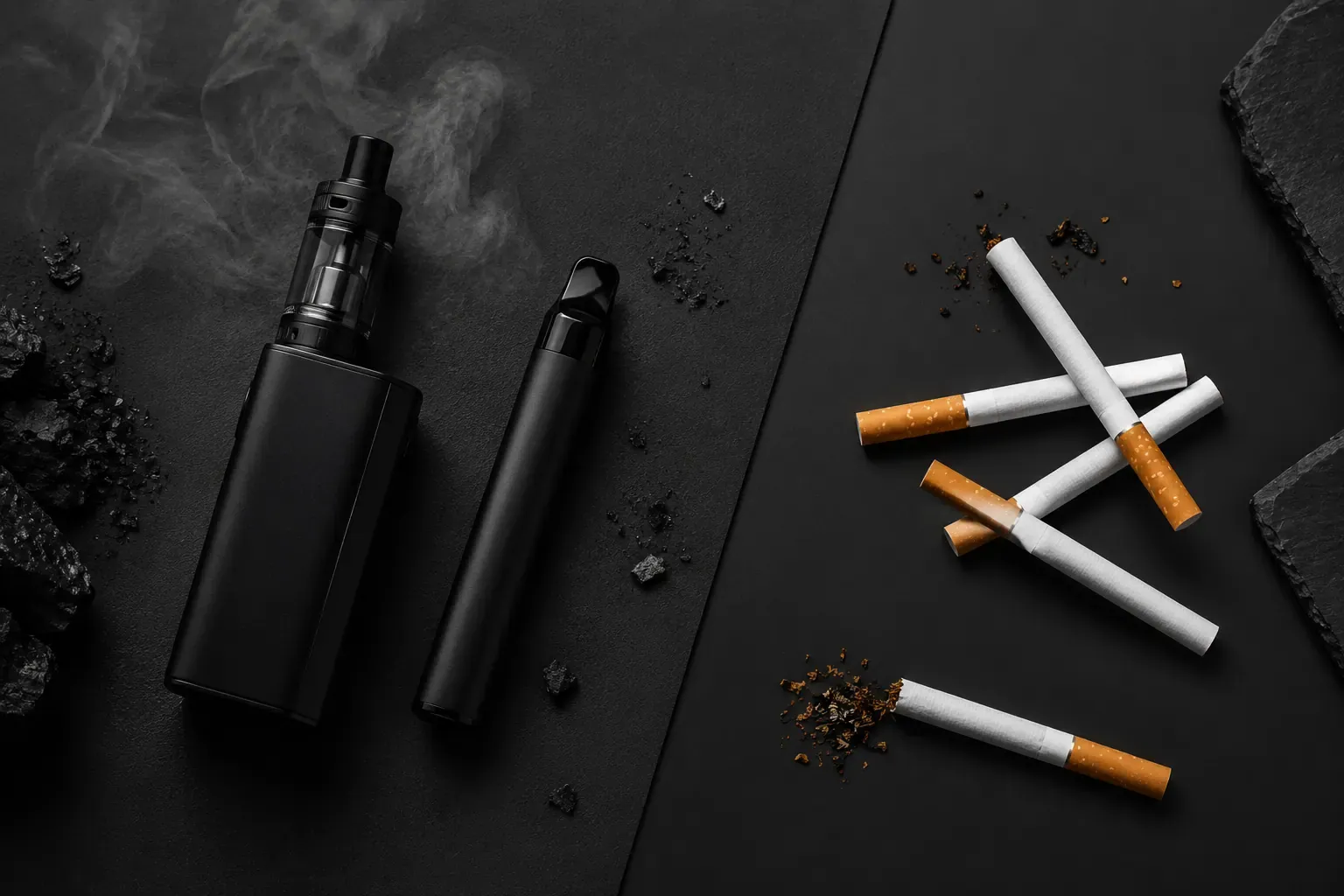
Specialist tobacconist exemption: what UK cigar rules mean
The Tobacco and Vapes Act 2026 represents a significant change in the way tobacco products will be sold, advertised and presented in the UK. This overview offers tobacconist compliance advice on preparing for the changes introduced by the tobacco and vapes act 2026.
Understandably, the new rules have caused particular concern among specialist tobacconists and premium cigar retailers, whose businesses operate rather differently from ordinary convenience stores and general tobacco retailers.
There is some good news for the specialist trade. The Act retains a limited specialist tobacconist exemption for certain advertising inside specialist tobacconists. However, that exemption is tightly drawn and does not amount to a general freedom to advertise cigars.
At the same time, the Government is considering further rules which could substantially change cigar packaging, health warnings and the presentation of premium products.
So, what does the position look like for specialist tobacconists?

Advertising inside a specialist tobacconist
Section 127 of the Tobacco and Vapes Act 2026 provides a narrow advertising exemption for specialist tobacconists and is central to specialist tobacconist regulations.
Under the provision, an advertisement promoting a tobacco product may fall outside the Act’s principal advertising offences where it:
- appears inside a specialist tobacconist;
- cannot be seen from outside the premises;
- does not advertise cigarettes or hand-rolling tobacco; and
- complies with any health-warning or information requirements introduced by regulations.
In practical terms, this means that qualifying internal advertising for cigars and certain other tobacco products may continue, provided all the necessary conditions are met under cigar advertising rules UK.
It is not, however, an unrestricted advertising exemption.
It does not authorise cigar advertising in shop windows, on external signs or through general online marketing. Retailers will also need to consider the separate tobacco display regulations UK governing the display of tobacco products and prices.
The Government has indicated that the Act’s wider advertising provisions are intended to come into force from 1 June 2027, although the detailed implementation arrangements and regulations will need to be followed carefully.
Is cigar sampling still allowed?
There is currently an exemption from smoke-free legislation which permits customers to sample cigars and pipe tobacco inside qualifying specialist tobacconists. This cigar sampling exemption reflects long-standing practice in the premium segment.
This is not a blanket permission to smoke inside a shop. The premises must satisfy the applicable requirements, including those relating to the designated sampling area, ventilation and separation from other smoke-free parts of the premises.
The Government expressly acknowledged the existing specialist tobacconist sampling exemption in its February 2026 consultation on smoke-free, heated-tobacco-free and vape-free places. It did not propose abolishing that exemption through the Tobacco and Vapes Act itself.
For the time being, therefore, qualifying cigar and pipe-tobacco sampling remains possible.
That position is not guaranteed indefinitely. The Government could amend the relevant smoke-free regulations through secondary legislation at a later date. Specialist tobacconists should therefore avoid assuming that the current exemption will remain untouched.
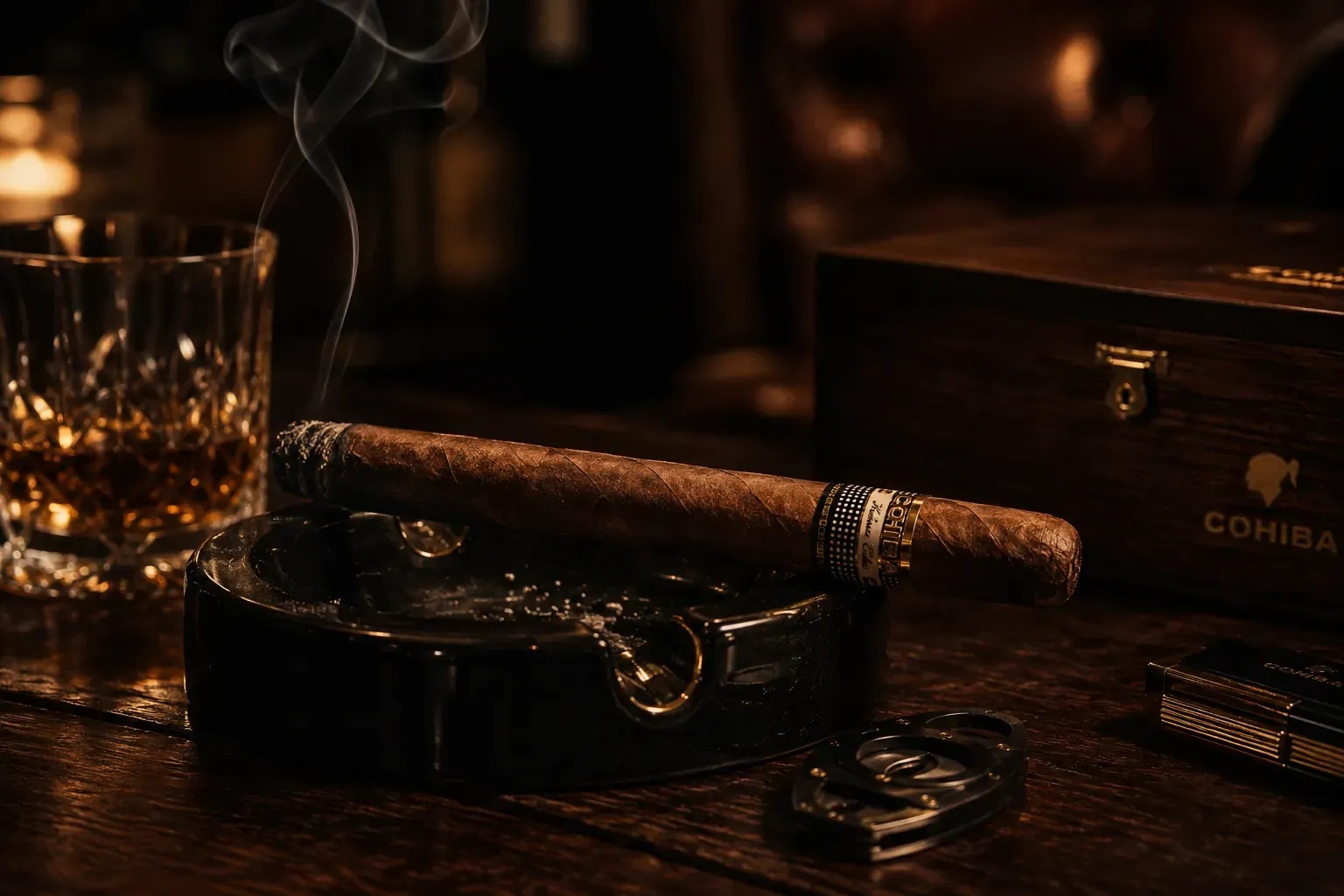
Major changes proposed for cigar packaging
Advertising is only one part of the picture.
The Tobacco and Vapes Act gives ministers powers to introduce regulations covering the packaging, appearance, features, contents, flavours, registration and information requirements of tobacco products, including cigars.
On 10 July 2026, the Government published a further consultation dealing with tobacco and vape packaging, appearance and display.
The proposals affecting cigars include:
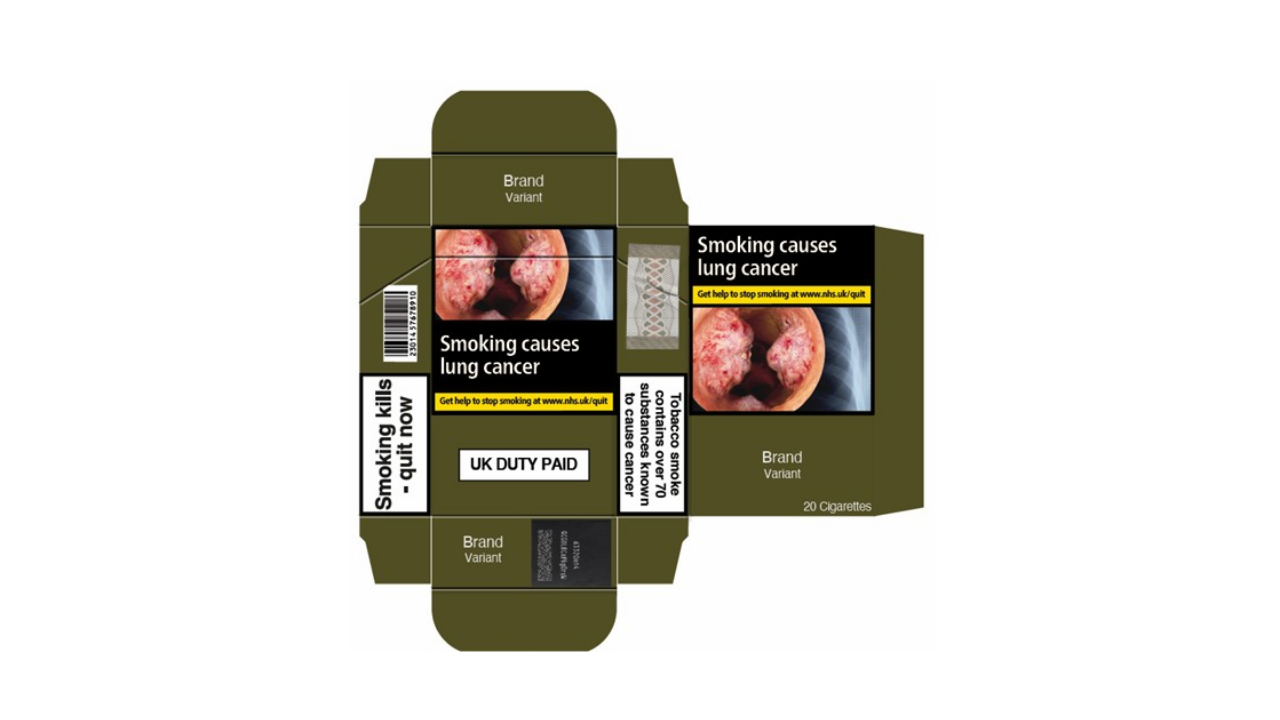
- plain or standardised packaging for cigars and cigarillos;
- picture health warnings on cigar packaging;
- warnings on individually wrapped cigars and packs of larger cigars which are currently subject to different requirements; and
- cessation-information inserts inside cigar packaging.
These measures are proposals rather than current law.
If adopted, however, they could have a considerable impact on the premium cigar market. Traditional cigar boxes, bands, tubes, wrappers and other branded presentation are central to the way many premium products are marketed and distinguished from one another.
Plain packaging could therefore involve much more than a simple change to a label.
No specific exemption for handmade cigars
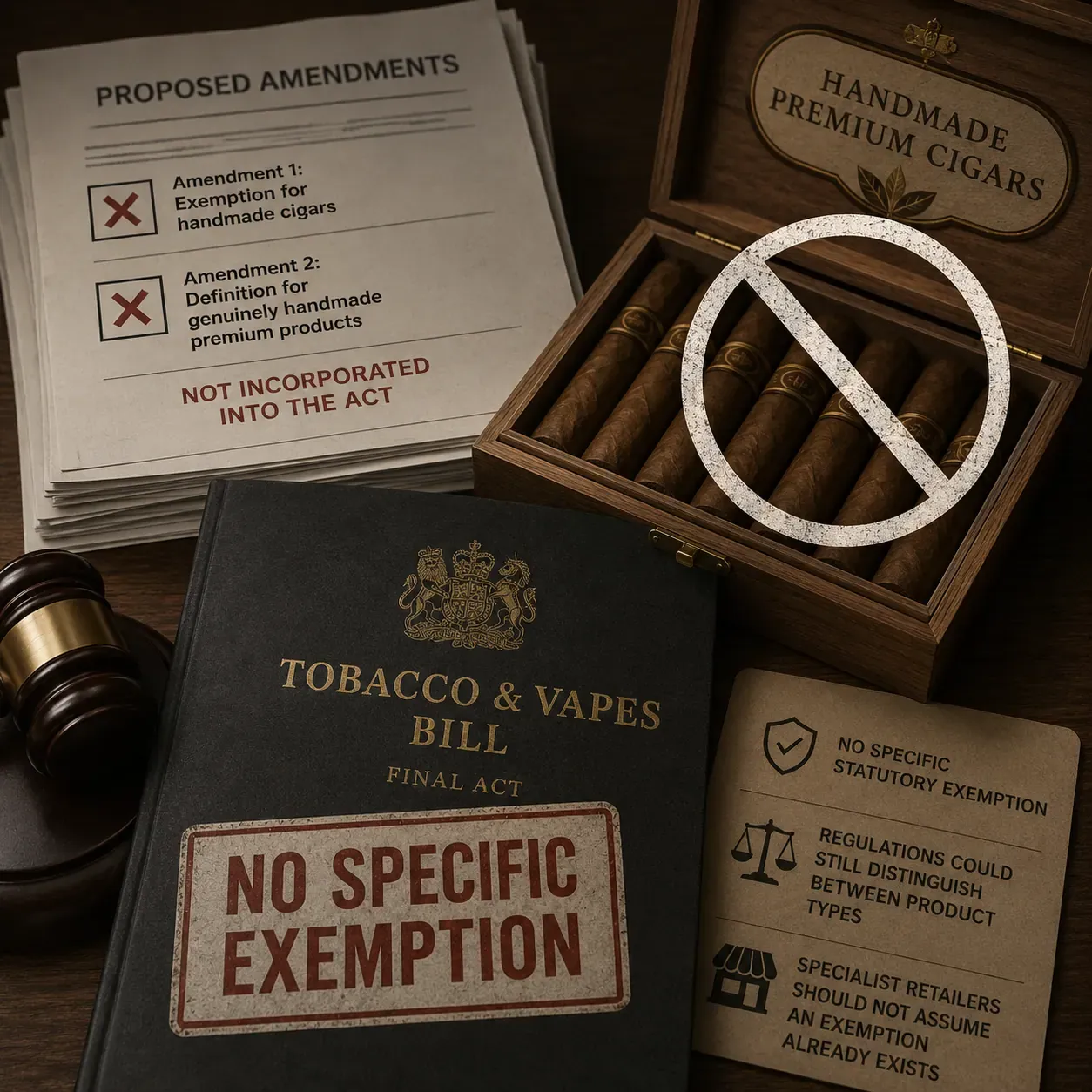
During the passage of the legislation, amendments were proposed which would have exempted handmade cigars from certain retail-packaging requirements.
One amendment sought to create a specific exemption for handmade cigars, while another proposed a statutory definition designed to limit that exemption to genuinely handmade premium products.
Those provisions were not incorporated into the final Act.
As a result, there is currently no specific statutory exemption protecting handmade or premium cigars from the Act’s packaging-control powers.
That does not mean the Government must impose identical rules on every cigar product. Regulations could still distinguish between product types. But specialist retailers should not proceed on the basis that premium or handmade cigars have already been carved out of the legislation.
Retail licensing is also on the way
The Act also establishes a framework—often described as a tobacco retail licence UK model—for licensing the retail sale of tobacco and related products in England and Wales.
The detailed operation of the scheme—including application procedures, licence conditions, fees and commencement dates—will depend on further regulations. It would therefore be premature to describe the new regime as an ordinary local licence which retailers can already apply for. Guidance on cigar shop licensing UK will emerge as regulations are finalised.
Nevertheless, cigar shops and specialist tobacconists should begin preparing for a more formal licensing and enforcement environment. The Act includes provisions allowing retail sales of tobacco products to be prohibited unless the retailer holds the required licence.
Good preparation is likely to include:
- checking whether the business meets the legal definition of a specialist tobacconist;
- reviewing all internal and external advertising;
- checking that displays cannot be seen from outside;
- reviewing cigar-sampling arrangements;
- keeping reliable age-verification procedures;
- monitoring forthcoming packaging regulations; and
- preparing for the future retail-licensing scheme.
Preparation is the safest course
The specialist tobacconist exemption is valuable, but it is narrow.
It protects certain advertising inside qualifying premises; it does not provide a general exemption from tobacco advertising, display, packaging or licensing rules.
And with further regulations and consultations still to come, the position is likely to develop quickly.
As ever in licensing and compliance, it is better to check the position before making changes rather than waiting for an enforcement officer to point out a problem.
Complete Licensing can assist specialist tobacconists, cigar retailers and other businesses with regulatory compliance, licence applications, operating procedures and discussions with local authorities.


Q & A
Question: What is the specialist tobacconist advertising exemption and when does it apply? Short answer: Section 127 of the Tobacco and Vapes Act 2026 creates a narrow exemption for advertising inside specialist tobacconists. An advertisement promoting a tobacco product may fall outside the Act’s principal advertising offences only if it: appears inside a specialist tobacconist; cannot be seen from outside the premises; does not advertise cigarettes or hand-rolling tobacco; and complies with any health-warning or information requirements set in regulations. This permits qualifying internal advertising for cigars and certain other tobacco products, but it is not a general exemption and does not override separate tobacco display rules. The Government intends the Act’s wider advertising provisions to come into force from 1 June 2027, so retailers should follow the implementing regulations closely.
Question: Can I promote cigars in shop windows, on exterior signs, or online? Short answer: No. The exemption does not authorise cigar advertising in windows, on external signage, or through general online marketing. Retailers also need to comply with separate tobacco display regulations, including ensuring that product displays and prices cannot be seen from outside the premises.
Question: Is in-store cigar sampling still allowed in specialist tobacconists? Short answer: For now, yes—subject to conditions. There is an existing exemption from smoke-free legislation that permits customers to sample cigars and pipe tobacco inside qualifying specialist tobacconists. It is not a blanket permission: premises must meet the relevant requirements, such as having a designated sampling area, adequate ventilation, and separation from other smoke-free areas. The Government acknowledged this exemption in its February 2026 consultation and did not remove it via the Act. However, the position could change through future secondary legislation, so businesses should not assume it will remain unchanged.
Question: Are major packaging changes coming for cigars, and do they affect handmade products? Short answer: The Government has consulted (10 July 2026) on proposals—not yet law—that would introduce plain or standardised packaging for cigars and cigarillos, picture health warnings, warnings on individually wrapped cigars and larger packs, and cessation-information inserts. These could significantly impact premium cigar presentation if adopted. The final Act does not include a specific exemption for handmade or premium cigars; proposed amendments to create such an exemption were not enacted. While future regulations could distinguish between product types, retailers should not proceed on the assumption that handmade or premium cigars are already exempt.
Question: What retail licensing changes are coming, and how should specialist tobacconists prepare? Short answer: The Act establishes a framework for licensing retail sales of tobacco and related products in England and Wales, but the operational details (applications, conditions, fees, and start dates) will be set by further regulations—so it is not yet a routine local licence you can apply for. Once in force, sales may be prohibited unless the retailer holds the required licence. Prudent preparation includes: checking whether the business meets the legal definition of a specialist tobacconist; reviewing all internal and external advertising; ensuring displays cannot be seen from outside; reviewing cigar-sampling arrangements; maintaining robust age-verification; monitoring forthcoming packaging regulations; and planning for the future licensing regime.
Contact Complete Licensing if you would like tobacconist compliance advice on preparing your business for the new tobacco retail-licensing and compliance regime.