SO Bar’s Newham licensing success: the preparation behind the hearing
On 9th November, 2026, Newham’s licensing subcommittee granted a new premises licence for SO Bar at Royal Victoria Place in Silvertown. The decision approved the use of the outside area subject to conditions. The operator wanted customers to be able to take drinks to their outside area in open containers and the application had to address concerns about how the space would be managed.
James Hoffelner, Licensing Strategy and Regulatory Crisis Specialist at Complete Licensing, led the application and hearing preparation, supported byDave Nevittwho developed the noise management and customer dispersal proposals, and Marcus Lavell who prepared the operator’s witness statement and represented the applicant at the hearing.
What SO Bar wanted to achieve
Under SO Bar’s existing premises licence, alcohol supplied for consumption off the premises had to be served in sealed containers. The operators wanted customers to be able to buy a drink at the bar and take it onto the terrace in an open container.
The new premises licence application covered the supply of alcohol for consumption on and off the premises. It also included indoor film screenings, live and recorded music, dance performances and late-night refreshment.
With neighbouring homes nearby, Complete Licensing focused on how staff would manage the outside area in practice.
● Who would supervise the terrace?
● How would staff deal with customers moving between the terrace and the bar?
● What would happen when customers stepped outside to smoke or left at the end of the evening?
For the operator, the answers would shape how staff ran the space. For neighbours, they would help explain how the bar proposed to manage noise and activity outside the premises.
Why Complete Licensing reconsidered the application route
Initially, Complete Licensing discussed a premises licence variation with the operator. Before proceeding, James reviewed the existing licensing position and revisited what the operator wanted to achieve with the outside area.
In August 2026, the operator agreed to pursue a new application instead of applying for a licence variation. Newham’s subcommittee received the new premises licence application on 11th September 2026. The earlier variation application was formally withdrawn on 14th September, and the new application went before the subcommittee on 9th November.
The starting point was the venue’s existing permissions and how the operator wanted the premises to work in practice. Once the operator agreed to the new application, Complete Licensing prepared the supporting material around the proposed operation. That gave the team a clear basis for explaining the change, the concerns it raised and the measures the operator was proposing.
For operators weighing up a similar change, Complete Licensing’s guide covers whether to vary a premises licence or make a new application.
How Complete Licensing addressed concerns about the outside area
The subcommittee received representations from residents, a ward councillor and the local property manager, alongside letters supporting the application. The concerns included noise, public safety, and crime and disorder. Complete Licensing addressed the practical questions raised about how staff would supervise the terrace, manage smoking outside and help customers leave quietly.
Noise from the premises and terrace
The noise management plan gave the operator a way to show how staff would manage noise as part of the evening’s service. An outside area can affect neighbouring homes, even if the main service occurs indoors.
For the hearing, the plan helped connect that concern to the way the operator proposed to run the venue. The plan set out who would monitor noise and what staff should do if a problem arose.
For more on managing noise from outdoor areas, see Complete Licensing’s guide to preventing public nuisance at licensed premises.
Smoking and customer dispersal
Smoking and dispersal called for different arrangements. For smoking, the proposal identified a designated area on the dockside. Identifying a specific location helped the team consider how staff would supervise it. The departure and dispersal work addressed what would happen as customers left the premises, when customers might gather outside and voices could carry to neighbouring properties.
The venue’s practical operating policies should give staff clear instructions on supervising the smoking area and helping customers leave quietly.
A dispersal plan is most useful when it shows staff the actions they can take. At a bar, that could include reminding customers to leave quietly and paying attention to where people tend to gather as they go. The arrangements need to fit the premises, its layout and how people actually leave.
Supervision and security
The proposals also covered SIA-related training and CCTV for outside areas. Those measures formed part of the discussion about how the team would supervise the space and respond to incidents. They sat alongside the noise and dispersal plans, so the proposals covered what staff could do during service as well as what would happen as the evening wound down.
Considering environmental health
Dave Nevitt is Complete Licensing’s Chief Environmental Health and Safety Consultant. He helped turn the concerns into operating proposals the client could discuss and put into practice and he engaged with Councillor Rob Callender about the concerns raised.
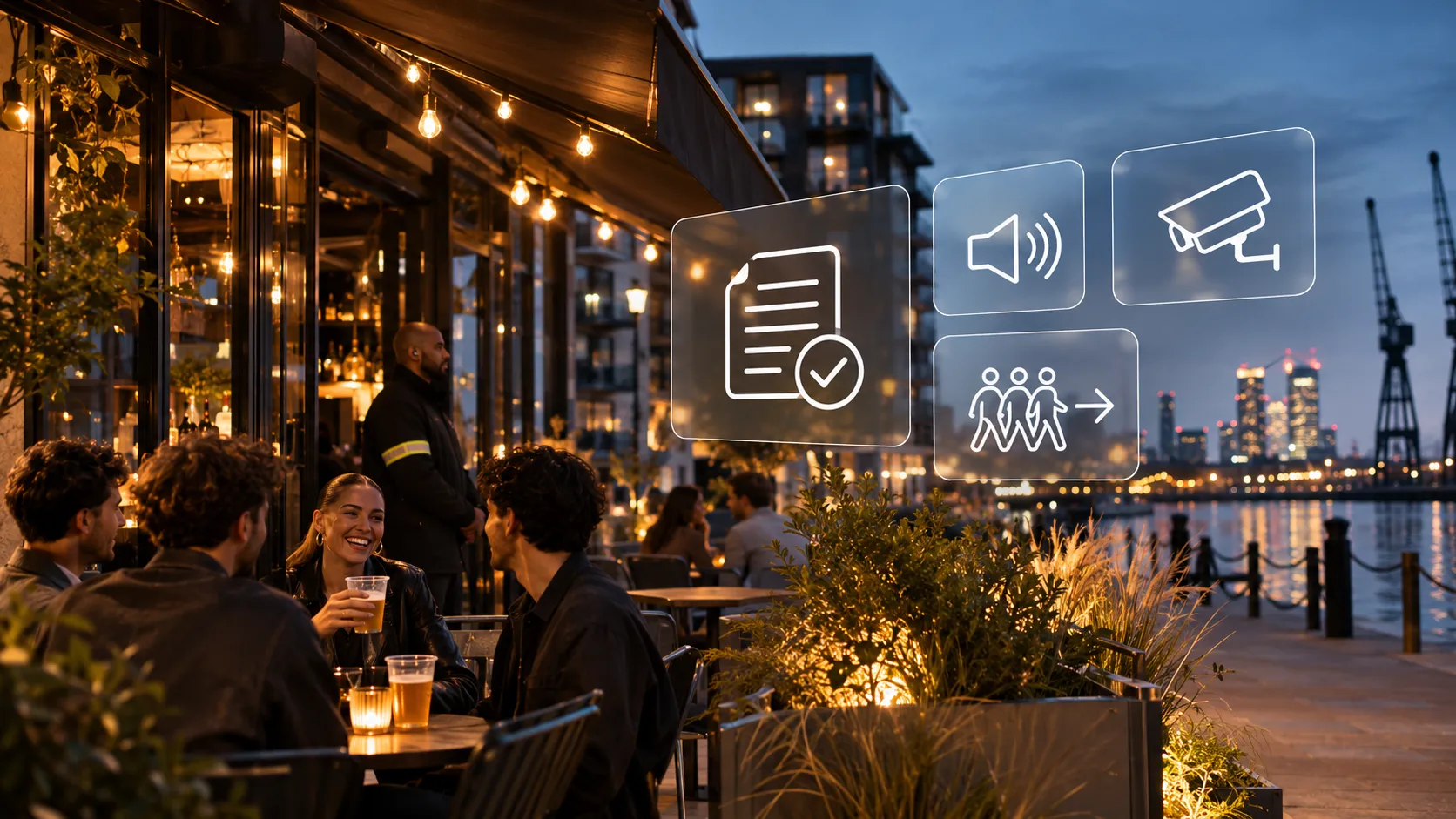
Dave brought the proposals together around five areas:
- SIA-related training
- Noise management
- Customer departure and dispersal
- A designated dockside smoking area
- CCTV
Putting these elements together made it easier to see how one arrangement might affect another. For example, a designated smoking area might raise questions about how staff will supervise it and how customers will move between that area and the venue.
This detail makes practical operating policies useful to the operators running a venue. The policy needs to make sense to the person on duty when the terrace is busy, when someone raises a concern or when several groups leave at once.
Preparing the evidence for the licensing hearing
Once the application and operating proposals were in place, James coordinated the supporting documents and specialist input and brought the hearing material together. The written material needed to give the subcommittee a consistent account of what the operator was asking for and how the arrangements would work.
Before the hearing, Complete Licensing invited residents who had made representations to discuss their concerns and suggest ways the venue could improve its operation.
Marcus Lavell met with the client and drafted the witness statement. He asked the operator to check the factual details and revised it in response to their comments. The operator knew how the venue worked day to day, so their review mattered. It gave Marcus a chance to check the statement against the client’s own account before relying on it at the hearing.
Marcus represented the applicant before Newham’s licensing subcommittee. The evidence gave him a basis for explaining the proposal and responding to concerns about the outside area. The subcommittee could then consider the representations alongside the application and proposed operating measures.
What Newham granted and what happened next
On 9th November 2026, Newham’s licensing subcommittee granted SO Bar a new premises licence, approving the use of the outside area subject to conditions. The subcommittee added the following requirements:
● Outside area closing times: The outside area must close by 10pm from Sunday to Thursday and by 11pm on Fridays and Saturdays.
● Door supervision: An SIA-licensed officer must be on duty from 9pm to 2am on Fridays and Saturdays.
● Outdoor music: Speakers and amplified music are prohibited in the outside area.
● Staff training: Staff must receive training every six months.
● Commercial waste: Commercial waste operations must take place outside the hours of 10pm to 8am.
● Drinks consumed outside: Staff must serve drinks intended for consumption outside in plastic cups.
For the operator, the grant meant updating closing routines, arranging weekend security cover and briefing staff on how drinks would be served for the terrace. On the day of the hearing, James Hoffelner also introduced the operator to a specialist who could help set up the noise limiter.
What other operators can learn from SO Bar’s case
SO Bar’s application offers practical lessons for other operators who want to license an outside area, from choosing the right application route to making sure staff know what to do once the licence is granted.
Check the application route early
SO Bar initially considered varying its existing premises licence before deciding to make a new application. If you’re planning a similar change, we recommend starting with what your current licence and approved plan allow, then set out exactly how the outside area would be used. This provides you with a clear basis for deciding which route to take.
Respond to each concern with a practical proposal
At SO Bar, noise during service, customers stepping outside to smoke and groups leaving at closing time each need a different response. Set out what staff would do, who would be responsible and when they would step in. These details help you demonstrate how your proposals would work during a busy shift.
Give the operator time to check the witness evidence
Marcus Lavell drafted SO Bar’s witness statement and revised it once the operator had reviewed it. The people who run the venue can check whether the statement accurately describes day-to-day operations and whether the proposed measures are realistic for staff to carry out.
Plan how licence conditions will work in practice
Carefully consider who would be responsible for updating closing procedures, arranging security cover or organising refresher training if those measures formed part of the grant. After the hearing, use the final licence conditions to brief staff and assign responsibility for each change.
Frequently asked questions
Can a premises licence application be granted if there are objections?
Yes. In England and Wales, the licensing authority considers relevant representations in relation to the licensing objectives. Depending on the case, it may grant the licence, grant it with conditions or refuse the application under the Licensing Act 2003, section 18.
Does an operator need permission to serve alcohol in an outside area?
The answer to this question depends on the existing premises licence, the licence plan and the way in which you intend to use the space. We recommend checking where alcohol would be sold and consumed, what the existing licence conditions contain and whether any separate planning or landowner permissions apply. Learn more about the Home Office’s licensing guidance.
What should operators prepare for an opposed licensing hearing?
Start with the application, plan and representations. Once you have these, identify what each concern relates to and gather the evidence and operating proposals that address it. Check witness statements with the people providing them and make sure the documents explain how the proposed arrangements would work at your premises.
Who represented SO Bar at the Newham licensing hearing?
Barrister Marcus Lavell represented the applicant. James Hoffelner coordinated the application and hearing preparation for Complete Licensing, and Dave Nevitt contributed the environmental health and operational work.
Related case study: See how complete Licensing helped Duos Lounge retain its existing licence in a separate premises licence review case.
Support with your premises licence application
If you’re looking to licence an outdoor area, responding to representations or preparing for a hearing, Complete Licensing can review your existing licensing position, help you develop operating proposals for your premises and coordinate specialist input where needed.