The best licensing hearing is the one you never need

Why early engagement, negotiation and good planning matter in licensing.
Some of the most important work I do when it comes to licensing cases takes place before an application has even been submitted. For a new venue, that might mean checking the hours needed for trading are realistic for the address. For a festival, it could mean reviewing the site to see where crowds will leave and whether the proposed route crosses a busy road.
Early engagement in a premises licence application gives operators and event organisers in England and Wales time to identify likely objections, test their plans and agree practical measures where possible. Ideally, this work should start before you sign a lease or announce an event. At that point, you still have room to change the site, layout, hours or operating model.
In this blog, I (James Hoffelner, Licensing Strategy and Regulatory Crisis Specialist) explain why early engagement, negotiation and good planning can resolve licensing issues before they reach a hearing, and how operators and event organisers can put that into practice.

Start with a conversation before your application
When an operator approaches me about their premises licence, I start by looking at what the business needs from it and how the site will operate on a busy night. Which hours are essential? Where will customers queue, smoke or wait for a taxi? What is above the premises, and who lives next door?
Let’s use a late night venue with flats above it and an entrance on a residential street as an example. If the business depends on trading until 2am, I will need to review the council’s statement of licensing policy and understand how customers will arrive and leave before the operator commits to the premises.
If the entrance to the venue is likely to cause a problem, it might be possible to change the layout. If the hours the business needs are unlikely to be achievable, that should inform the decision about whether to take the lease.
If the site already has a premises licence, I ask for the full licence and plan so I can compare the authorised activities, hours, licensed areas and conditions with the proposed operation. I also check whether the premises is covered by a cumulative impact assessment and what local concerns it identifies. From there, I help the operator separate the permissions the business needs to open from those it could do without. A venue that relies on late night sales faces a different decision to one that wants later hours for a few nights a year. If the existing licence doesn’t cover the hours or activities you need, it’s worth assessing whether a premises licence variation is the right route before you commit.
Paragraph 9.35 of the Home Office’s 2026 section 182 guidance encourages applicants to contact responsible authorities and anyone who may be affected, including local residents, before creating an application. This provides time for discussions and mediation to occur before the statutory timetable starts.
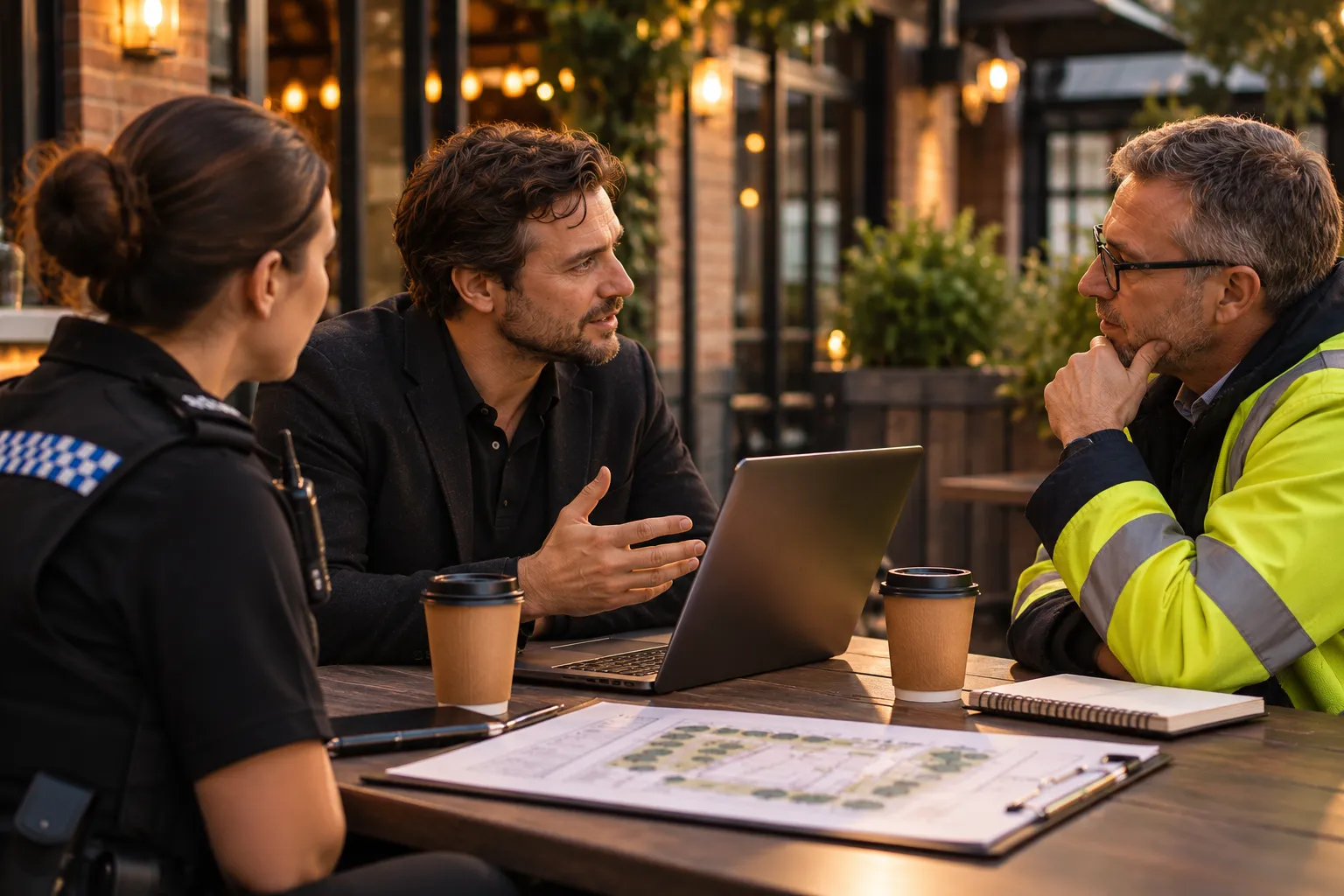
I take the same approach when an organiser is planning a programme of events. In one case, I contacted the council early to discuss the proposed programme, and a Safety Advisory Group (SAG) meeting was subsequently proposed. Starting that conversation while the programme was still taking shape gave the organiser room to consider any feedback before committing to the plans.
How early engagement helps address licensing objections
When completing a premises licence application, some operators worry that approaching the police or environmental health will invite objections. I think the opposite is true. Speaking to them early does not mean surrendering your position. It means learning what the concerns are while you can still respond, and putting forward a practical proposal rather than reacting to one.
For example, if residents are worried about late night noise, I want to know whether they expect to hear music through the building or people gathering outside after closing. Each calls for different measures. I prefer to speak to the people involved directly, explain why a proposed restriction would cause difficulty and offer an alternative.
Relationships matter more than many applicants expect. Authorities and residents are far more willing to accept a proposal from someone who has listened and been straight with them. I give people enough to respond to, such as a short summary of the activities, hours and capacity, plus a plan of what has been agreed and what remains open, so the application reflects those conversations. In one late hours application, mediation helped resolve objections before a hearing was needed.
Planning for problems before they happen
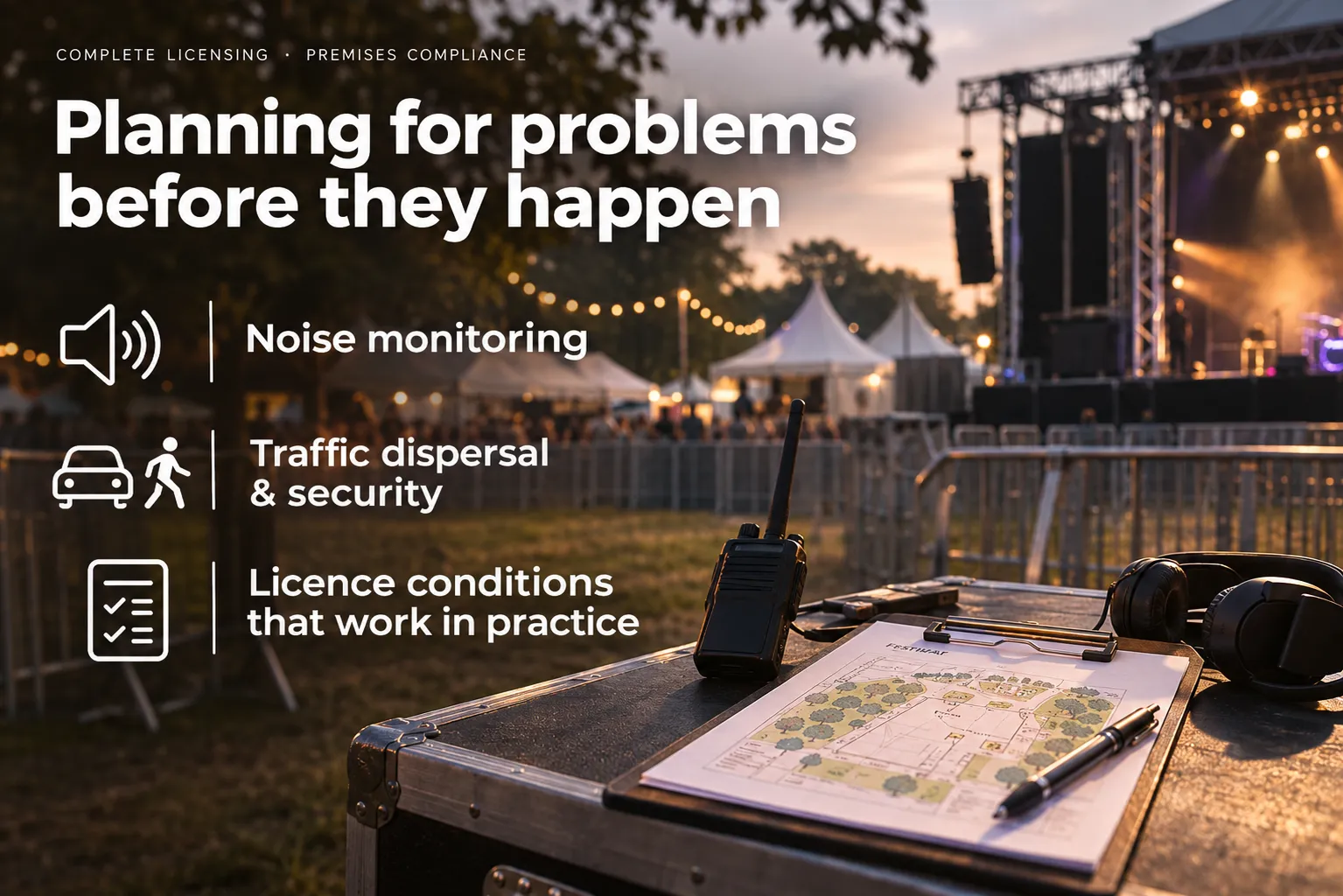
As part of my festival licensing work, I ask organisers to walk me through what their teams would do if the plan came under pressure. Who spots the problem? Who makes the decision? How does that decision reach the people who need to act on it? It’s much easier to answer those questions while there’s still time to change the layout, staffing or running order.
Let’s have a look at a few examples:
Noise monitoring
A plan might suggest that readings are taken throughout the event. I want to know where those readings will be taken, who will review them and how quickly they can reach the sound engineer if an adjustment is needed. For a recurring event, I’d look at previous complaints with the monitoring records, because the timing and location of complaints show where to focus.
Traffic dispersal and security
These need to work together. If cars and pedestrians are likely to reach the same exit after the headline set, I ask the traffic and security teams to walk through that part of the plan together. Who holds vehicles while people cross? If security staff are called to an incident, who keeps the exit covered? Bringing questions like these to the Safety Advisory Group early gives the organiser time to act on feedback and brief the people who will make those decisions on the day. Arrangements have to work in practice, not just look convincing on paper.
Negotiate licence conditions the team can follow
I reach each proposed licence condition as a duty manager would. Is it clear what staff need to do, when the condition applies and how they can show they have complied? A condition agree to resolve an objection can shape the way a business trades for years.
Say environmental health raises concerns about noise from a courtyard. A proposed restriction on all outdoor areas might also catch a separate space with a different impact on neighbours. I’d ask environmental health which area is causing concern and at what times, then look at what the operator can control. A condition that identifies the specific area and sets a clear time for customer use gives the team something they can apply on every shift.
Commitments in the operating schedule can also become licence conditions, even if nobody objects. If the schedule promises security cover every night, I ask the operator to cost that across the whole week and check whether quieter shifts need the same cover. Conditions must be precise, enforceable and appropriate to promote the licensing objectives, and before an operator agrees to one, I want them to understand what it means fro the staff, costs and trading. (Read the Home Office guidance on conditions consistent with the operating schedule.)
When a hearing is the right next step
Early engagement does not guarantee agreement. A premises licence application will generally go to a hearing if relevant representations remain and the licensing authority and all parties have not agreed to dispense with it. Sometimes the disputed point is central to whether the business can operate. If a proposed restriction would remove hours the business depends on and the evidence supports the hours sought, I am prepared to put the case to the licensing sub-committee. Read our guide to who can object to a premises licence application.
That is why I start preparing for a hearing while discussions are still open. I track the hours sought, the conditions agreed or proposed and the points still in dispute, then match the evidence to each one. If the issue is noise, the committee should see where nearby homes are, what the acoustic assessment found and who will carry out the controls on a busy night. If it is dispersal, a marked-up plan and a clear account of how staff will manage the exit will help.
If you’re planning an event or looking at a venue, I’m happy to talk through what you need from the licence and which decisions are worth testing before you commit. Speak to Complete Licensing.